
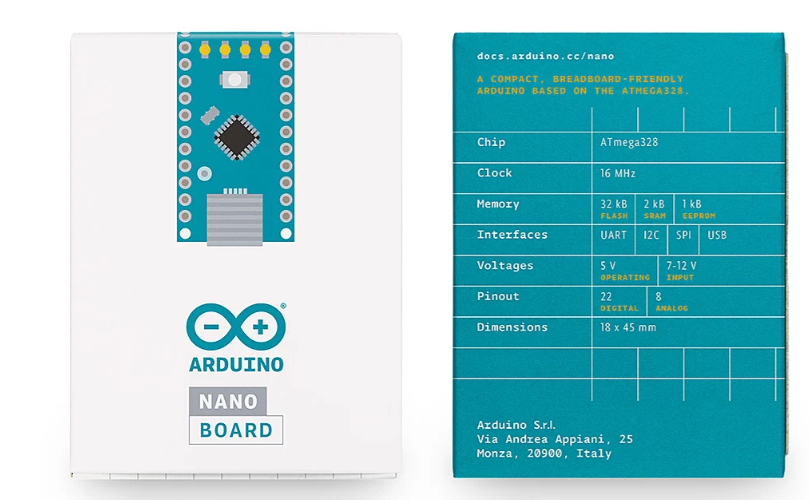
In the maker world, we often fall into the trap of thinking that shrinking a board means gutting its potential. The Arduino Nano is the ultimate “classic” because it shatters that myth. Despite a minuscule PCB footprint of just 18 x 45 mm and weighing in at a feather-light 7 grams, this tiny titan is far more than a novelty. It packs the punch of a full-sized microcontroller into a package that fits in the coin pocket of your jeans, making it the go-to choice for projects where every millimeter and milligram counts.
2. It’s Not Just a Smaller Uno—It’s Actually More Flexible
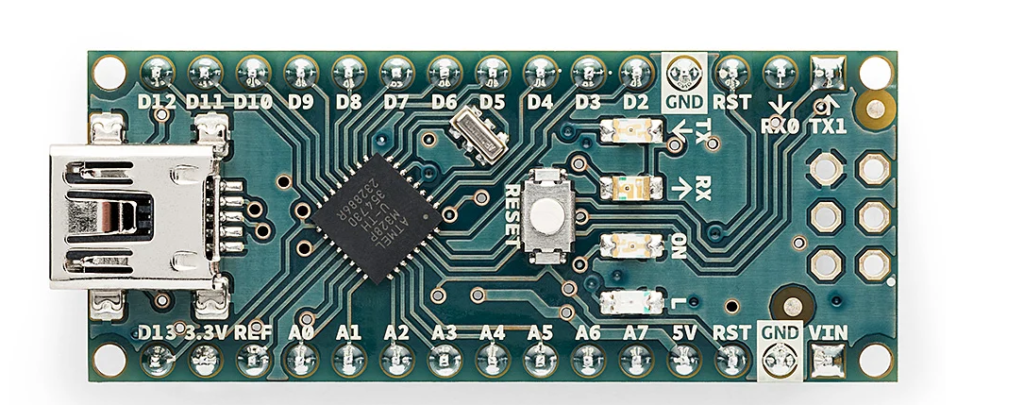
Many beginners assume the Nano is simply a shrunken Uno, but it actually solves the headache of sensor-dense builds without the bulk of an Arduino Mega. While it shares the ATmega328 core with larger boards like the Duemilanove, the Nano offers a specific hardware advantage: it provides 8 analog inputs instead of the standard 6 found on most larger form factors.
However, here is a pro-tip for your next build: while you get two extra pins (A6 and A7), remember that these are strictly analog inputs. You can’t toggle them as digital pins for LEDs or switches like you can with A0 through A5. This nuance is key when you’re planning your I/O, but having those extra ports makes the Nano the perfect brain for complex sensor arrays.
“I Started with UNO, but the NANO can do what the UNO can do for me, and with the small footprint.”
3. From Hobbyist Desk to Medical Prototype
The Nano’s reliability isn’t just for blinking LEDs on your workbench; it’s actually powering serious biomedical innovation. Recently, a group of chemistry and materials students used the Nano as the central brain for a lactose intolerance breath tester.
The device functions by detecting hydrogen levels (H2) in a patient’s breath—a byproduct of fermentation in the gut. By iterating with a MiCS-5524 gas sensor capable of detecting hydrogen from 1 to 1,000 ppm, the team built a functioning diagnostic tool. The Nano handled the sensor calibration and data processing within a standard aerosol mask, proving it has the chops for professional-grade prototyping.
The Arduino Nano is excellent for students to built compact projects such as home automation, because it can read sensors, control LEDs, relays, motors, buzzers, displays, and other modules.
4. The “Invisible” Reset: Quality of Life Engineering
If you’ve ever used older microcontrollers, you know the “reset button dance”—that frustrating manual hurdle where you have to time a physical button press perfectly to sync with your computer’s upload. The Nano eliminates this friction through a clever bit of Quality of Life engineering called the Automatic (Software) Reset.
By using the DTR hardware flow control line of the FT232RL USB-to-TTL chip and a 100 nanofarad capacitor, the Nano can reset itself the moment you hit “Upload” in your IDE. This hardware-level coordination allows for a much shorter bootloader timeout, which means you spend less time waiting and more time iterating on your code. It’s a seamless workflow that makes the board feel as modern as any high-end dev kit.
5. Designed for the Breadboard, Built for the Community
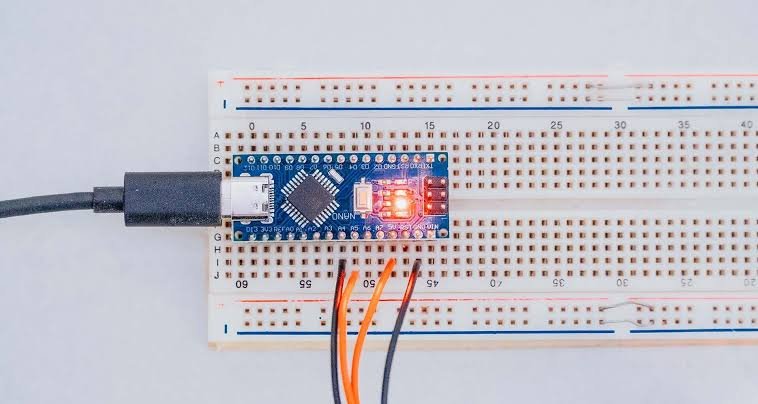
The Nano is a masterpiece of physical and philosophical accessibility. Its pin layout is “breadboard-friendly,” meaning you can plug it directly into a prototyping board and start wiring immediately—no jumper wire nests required. Furthermore, because it is Open-Source Hardware (OSH), the Eagle files and schematics are free to download, allowing you to move from a breadboard prototype to a custom integrated PCB of your own design.
The board also offers incredible power versatility, though you need to be careful:
- Mini-B USB connection for easy power and programming via your laptop.
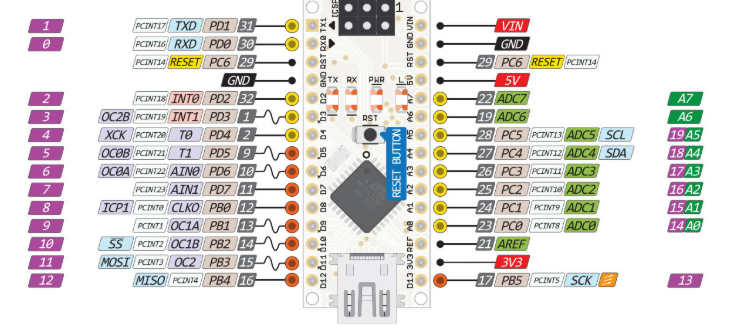
- 6-20V unregulated external power via Pin 30 (the VIN pin).
- 5V regulated external power via Pin 27
- 8 analog inputs ports: A0 .. A7
- 14 Digital input / output ports: TX, RX, D2 .. D13
- 6 PWM ports: D3, D5, D6, D9, D10, D11
- 1 pairs of TTL level serial transceiver ports RX / TX
- Using Atmel Atmega328P-AU MCU
- Support USB download and Power
- Support for external 5V .. 12V DC power supply
- Support power supply by 9V battery
Safety Tip: Be absolutely sure you don’t swap Pin 30 and Pin 27. Feeding unregulated high voltage into the 5V pin is the fastest way to release the “magic smoke” and fry your board!
Conclusion: The Future is Miniature
The Arduino Nano continues to be a cornerstone of the maker movement, driving everything from acoustic levitators to live room humidity monitors and RFID security circuits. It proves that when we strip away the bulk, we’re left with pure, unadulterated creative potential.