Learn, Make Mistakes, and Build with Confidence
If you’ve ever worked with electronics, you know that even a tiny mistake can have big consequences. A loose connection, the wrong voltage, or a missing resistor can quickly damage a component. For beginners, these mistakes are almost inevitable, and replacing damaged parts can become both frustrating and expensive.
That’s where circuit simulators make all the difference.
Platforms like Tinkercad Circuits give students and hobbyists a virtual workspace where they can design, test, and troubleshoot electronic circuits without worrying about breaking anything. Instead of being afraid to experiment, learners are encouraged to explore, make mistakes, and discover how circuits actually work.
Why Safe Failure Matters
The best way to learn electronics isn’t by memorizing formulas—it’s by building things.
Good educators understand that mistakes are part of the learning process. Rather than preventing students from making errors, they create an environment where those mistakes become valuable lessons. This idea is often called sandboxed failure: a safe space where learners can test ideas, fail, and try again without any real-world consequences.
With a simulator, students can:
- Build and modify circuits as many times as they like.
- Test ideas that might be risky on physical hardware.
- Spot wiring mistakes instantly.
- Gain confidence before moving to real components.
When there’s no fear of damaging expensive equipment, students become more curious and willing to experiment.
The “Exploding LED” Lesson
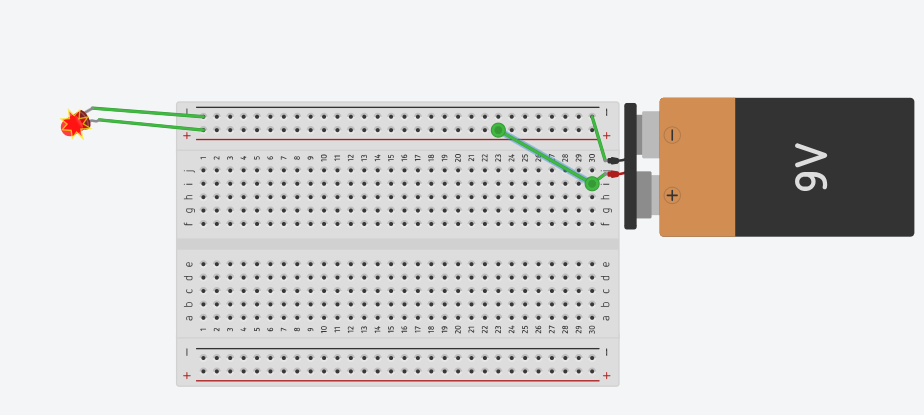
Students are asked to build a simple LED circuit in Tinkercad. However, there’s a catch—the 220Ω current-limiting resistor is intentionally left out.
Everything appears normal until they press Start Simulation
Instead of glowing, the LED suddenly “explodes” on the screen with a warning icon. While nothing is actually destroyed, the visual feedback immediately captures everyone’s attention.
That single moment teaches several important concepts:
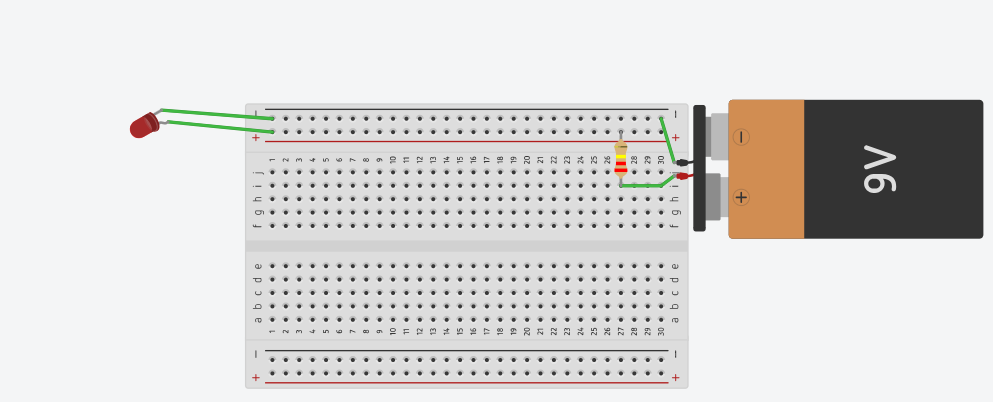
- LEDs need a resistor to control the current.
- Too much current can permanently damage electronic components.
- Protecting a circuit is just as important as making it work.
It’s a lesson students rarely forget because they experience the consequence without paying the price.
More Than Just a Practice Tool
Circuit simulators offer benefits that go far beyond convenience.
A Safe Place to Experiment
Students can explore electronics without worrying about burning components or damaging development boards.
Instant Learning
Instead of spending hours figuring out why a circuit isn’t working, learners receive immediate feedback that helps them identify and fix mistakes.
Stronger Understanding
Watching voltage, current, and component behavior in real time helps students connect theory with practice. Concepts that seem difficult in textbooks become much easier to understand when they can be seen in action.
Better Prepared for Real Hardware
After testing their designs in a simulator, students approach physical projects with greater confidence and make far fewer beginner mistakes.
From Simulation to Real Projects
A simulator isn’t meant to replace hands-on experience—it’s meant to prepare students for it.
By solving problems in a virtual environment first, learners spend less time troubleshooting basic errors when they move to real hardware. Instead, they can focus on designing, building, and improving their projects.
Whether it’s an Arduino project, a robotics challenge, or an IoT prototype, simulation provides a strong foundation before the first wire is ever connected.
Final Thoughts
Every engineer, maker, and inventor has learned through trial and error. The difference today is that technology allows us to make those mistakes safely.
Simulation platforms like Tinkercad encourage curiosity, creativity, and experimentation without the fear of damaging expensive equipment. They help beginners build confidence while giving experienced makers a quick way to test ideas before bringing them to life.
In the end, every failed simulation is simply another step toward building something better—and that’s exactly what making is all about.